
Across the Baltimore-through Washington, DC-Richmond corridor, employers are navigating evolving talent needs and rapid technological change while entry level talent is seeking clearer connections between education and careers and more meaningful opportunities to gain experience in the workplace.
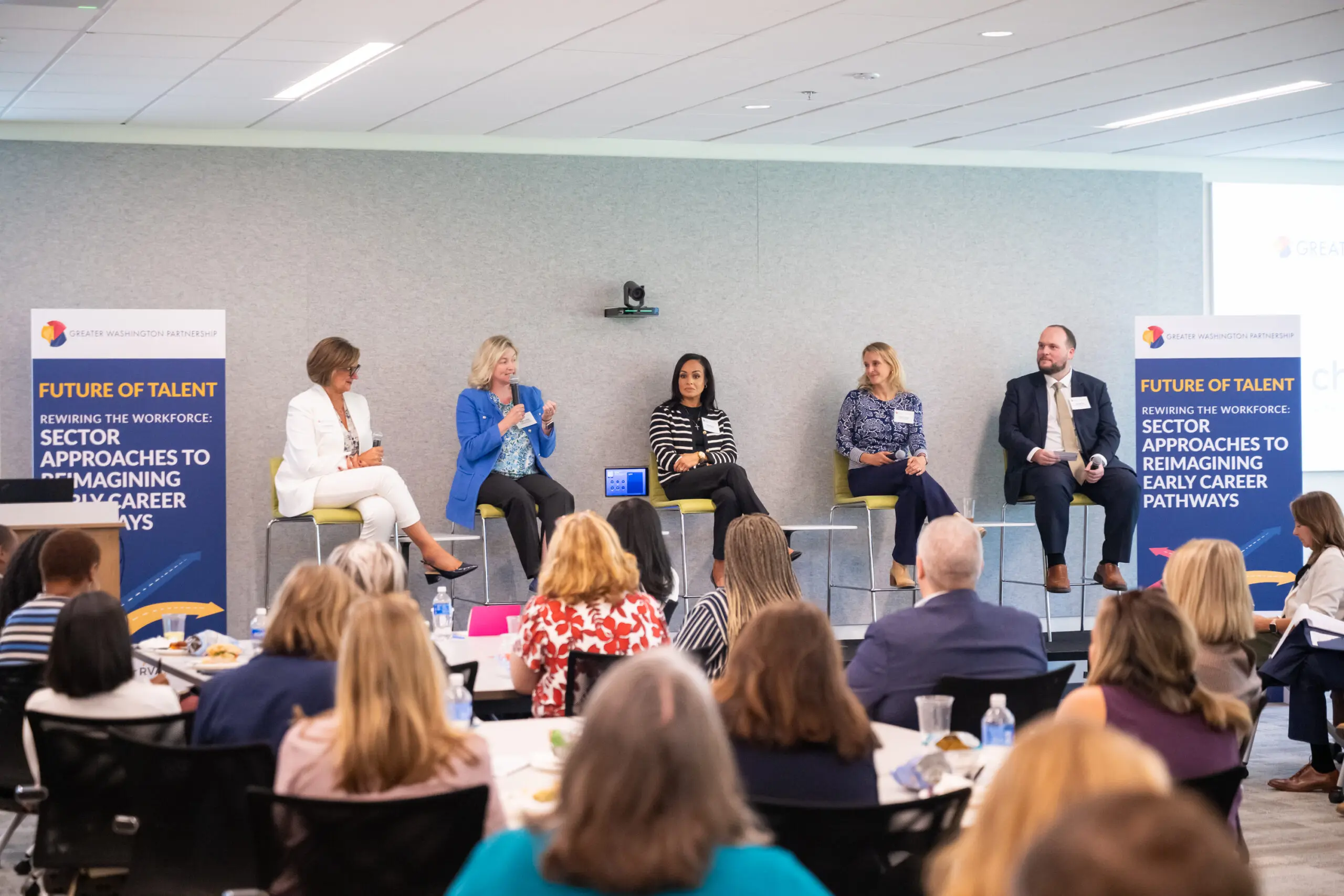 |
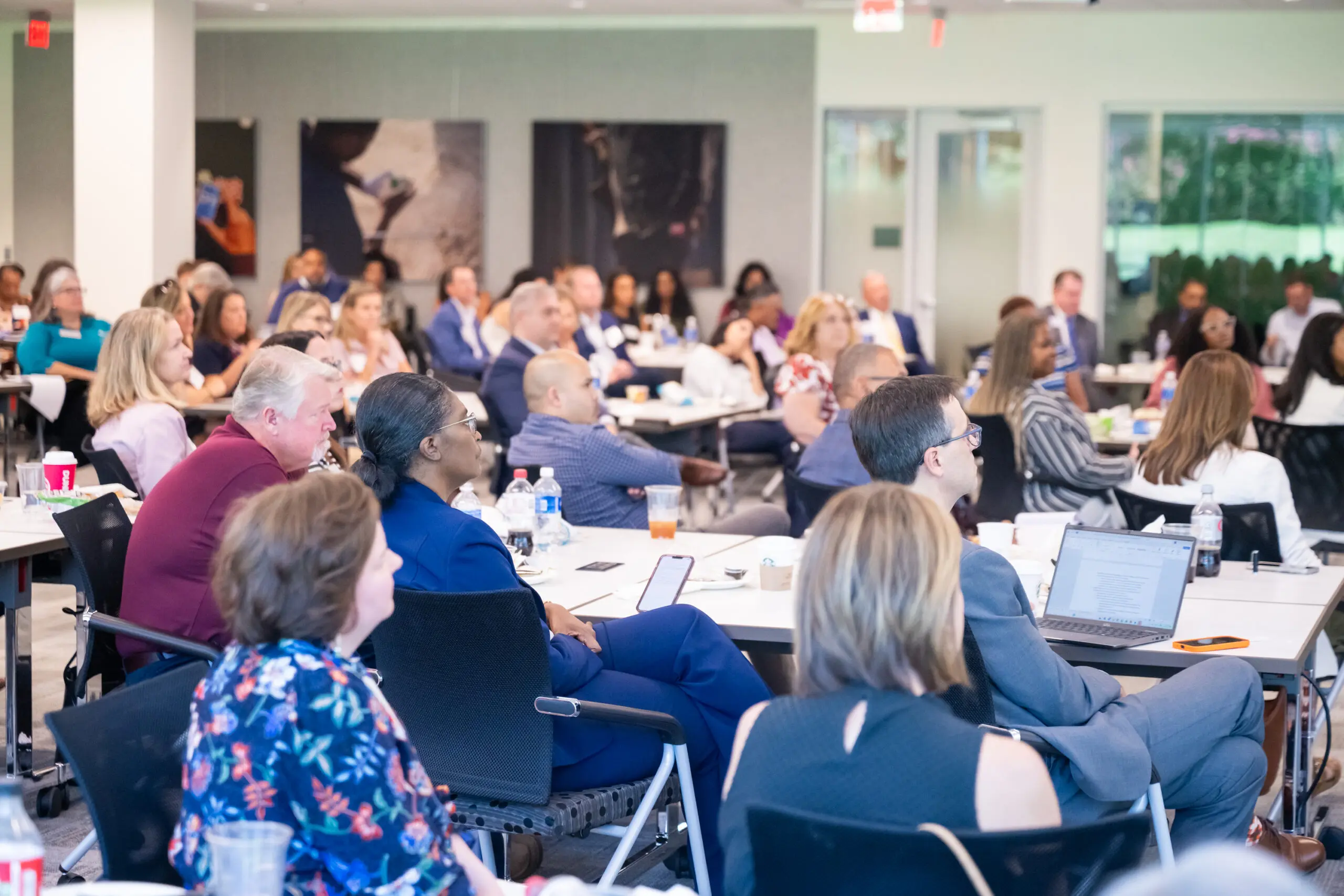
On September 9, Greater Washington Partnership, in partnership with ChamberRVA, convened business, education, workforce, and public-sector leaders in Richmond for the latest installment of its Future of Talent series. The discussion explored how employers and educators can strengthen early-career pathways, while highlighting how Virginia is putting many of these approaches into practice through employer engagement, work-based learning, sector partnerships, and greater coordination across the workforce ecosystem.
Event Overview
- Keynote: Mark Hourigan, CEO and Founder, Hourigan Construction
- Panelists:
- Ana Brown, Senior Technology Manager of Global Technology, Bank of America
- Emily Covey, Richmond Area Business Leader, DPR Construction
- Dr. Megan Healy, Chief Talent and Workforce Strategy Officer, Virginia Economic Development Partnership
- Dr. Paula Pando, President, Reynolds Community College
- Moderator: Kyle DeMaria, Regional Economist and Advisor for Workforce Pathways, Federal Reserve Bank of Richmond
Across the conversation, three themes stood out: young people need earlier exposure to careers and meaningful workplace experiences; employers and educators must work together to build stronger talent pathways; and AI is increasing the importance of combining technical fluency with durable human skills. The Richmond region provides examples of how these ideas can move from conversation to implementation.
Career exposure should start earlier – and include real experience
Students increasingly want to understand where their education can take them before they reach the end of a degree or credential. President Pando emphasized that career exploration should begin at the start of a student’s educational journey, with clearer information about career opportunities and the path from the classroom to the workforce.
Across Virginia, employers and educators are also creating more opportunities for students to experience careers firsthand. Mark Hourigan highlighted internships and work-based learning that expose students to different functions within construction, while Emily Covey described DPR Construction’s rotational approach to accelerating experience for new employees.
“Career exploration is no longer an at-the-end, but at the very beginning of a student’s education. And we need to be incredibly transparent about what it will take, how long it will take, how much it will cost, what the opportunities are in the region.”
— Dr. Paula Pando, President, Reynolds Community College
Stronger pathways require employers and educators to build together
One of the clearest lessons from the Richmond region is that building a stronger workforce does not always require creating a new program. It often requires better connecting the employers, educators, workforce organizations, and public-sector resources that already exist.
Both Mark Hourigan and Emily Covey pointed to the Richmond Region Construction Partnership, a sector partnership led by ChamberRVA, as an example of employers and workforce partners working collectively to identify shared challenges and reduce silos. Sector partnerships are industry-led, community-supported collaborations that bring businesses together with education, workforce, and other partners to address shared talent needs and strengthen regional economies. At the state level, Megan Healy highlighted Virginia’s broader efforts to align talent development with economic development and connect statewide resources with the specific needs of industries and communities.
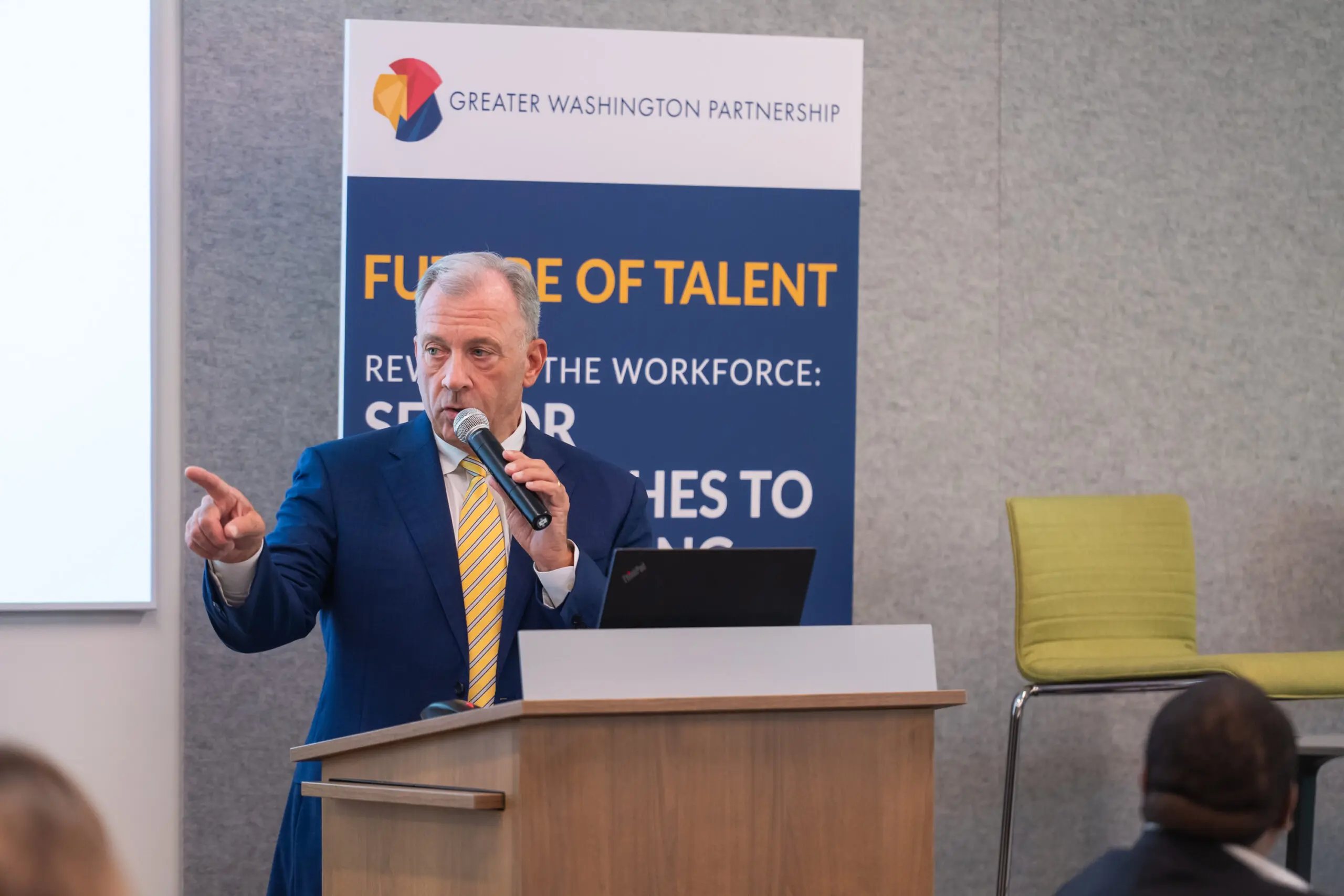 |
“Employers must become the producers of talent, not simply the consumers of talent.”
— Mark Hourigan, CEO and Founder, Hourigan Construction
AI is increasing demand for technical and durable human skills
Virginia employers and workforce leaders are also grappling with how AI will reshape jobs and the skills workers need. Ana Brown and Emily Covey described applications ranging from software development and data analysis to administrative work, document review, market research, and job-site safety.
But panelists emphasized that AI does not eliminate the need for strong foundational skills. As technology takes on more routine tasks, entry-level talent increasingly needs critical thinking skills, and the ability to apply technology within the context of their field.
For education and workforce systems, Megan Healy argued that responding to AI means integrating new capabilities across disciplines rather than treating AI exclusively as a standalone field of study.
“We do not need AI degrees… It is really about how do we integrate AI skills and competencies into all degrees and across disciplines.”
— Dr. Megan Healy, Chief Talent and Workforce Strategy Officer, Virginia Economic Development Partnership
What’s Next
 |
Efforts in Richmond and across Virginia offer practical examples of how employers, educators, workforce organizations, and public-sector leaders can work together to strengthen talent pipelines. Across the broader Baltimore-to-Richmond corridor, the opportunity is to build on these lessons by expanding early career exposure and work-based learning, deepening employer-education partnerships, and preparing workers to pair emerging technologies with durable human skills. The Partnership will continue to advance this work by bringing employers and educators together, elevating evolving talent needs and successful models of sector partnerships and talent pipelines, and helping translate those insights into stronger education and workforce pipelines across the region.
To learn more about The Future of Talent series or the Partnership’s Skills & Talent initiatives, contact Kimberly Sarro, Director of Skills & Talent, at [email protected].