

Perspectives


How can the region build a transportation system that keeps pace with growth and innovation? That was the central question we aimed to answer at this year’s Capital Region Transportation Forum, hosted by The Greater Washington Partnership and the Greater Washington Board of Trade.
Held on December 2nd at The George Washington University’s Jack Morton Auditorium in Washington, DC, the 8th annual forum brought together regional leaders and transportation stakeholders from across DC, Maryland, and Virginia. Attendees examined the region’s most pressing transportation challenges—from funding and governance to emerging technologies and data-driven planning—while exploring strategies to create a more connected, efficient, and forward-looking system.
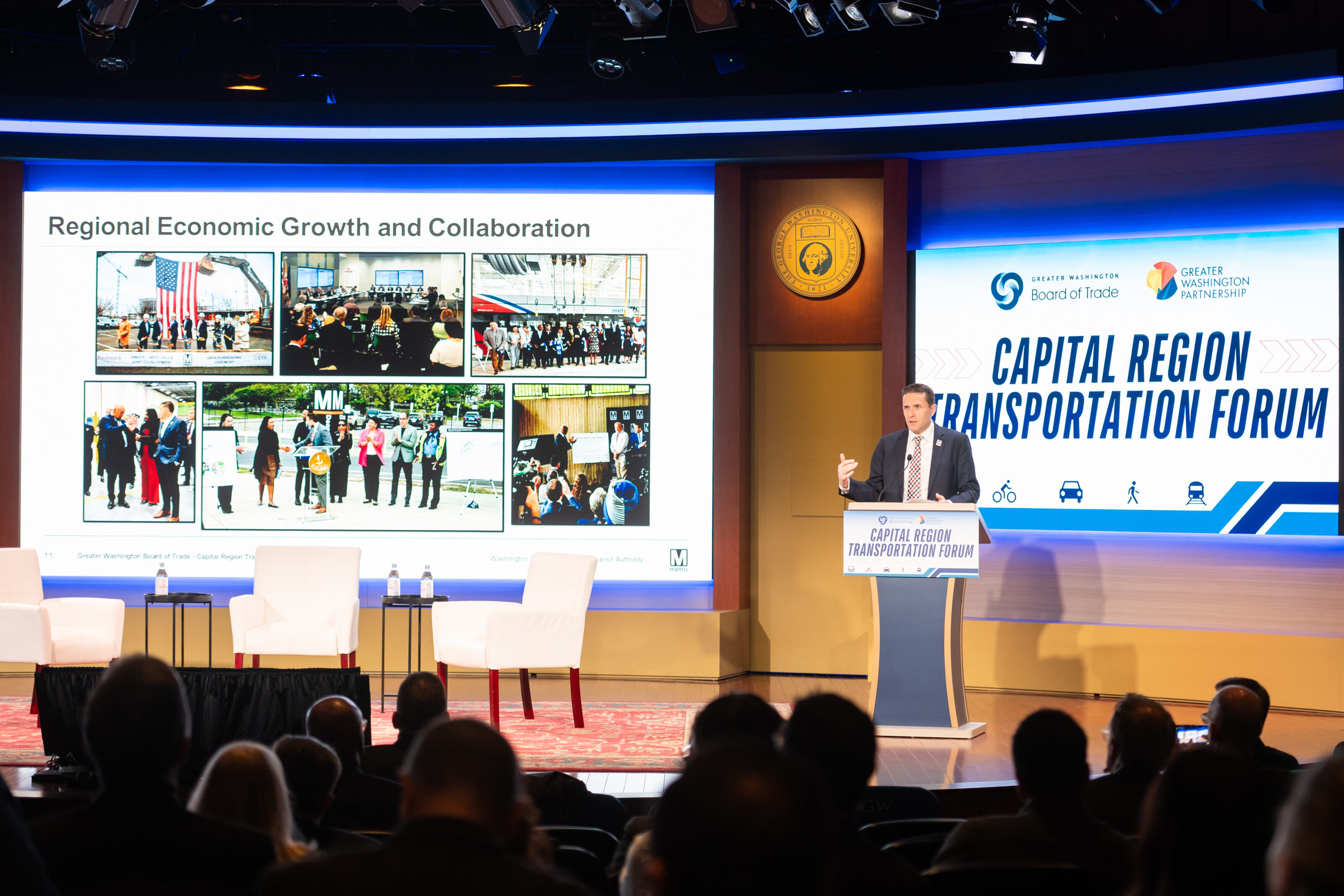
A Closer Look at the State of Metro
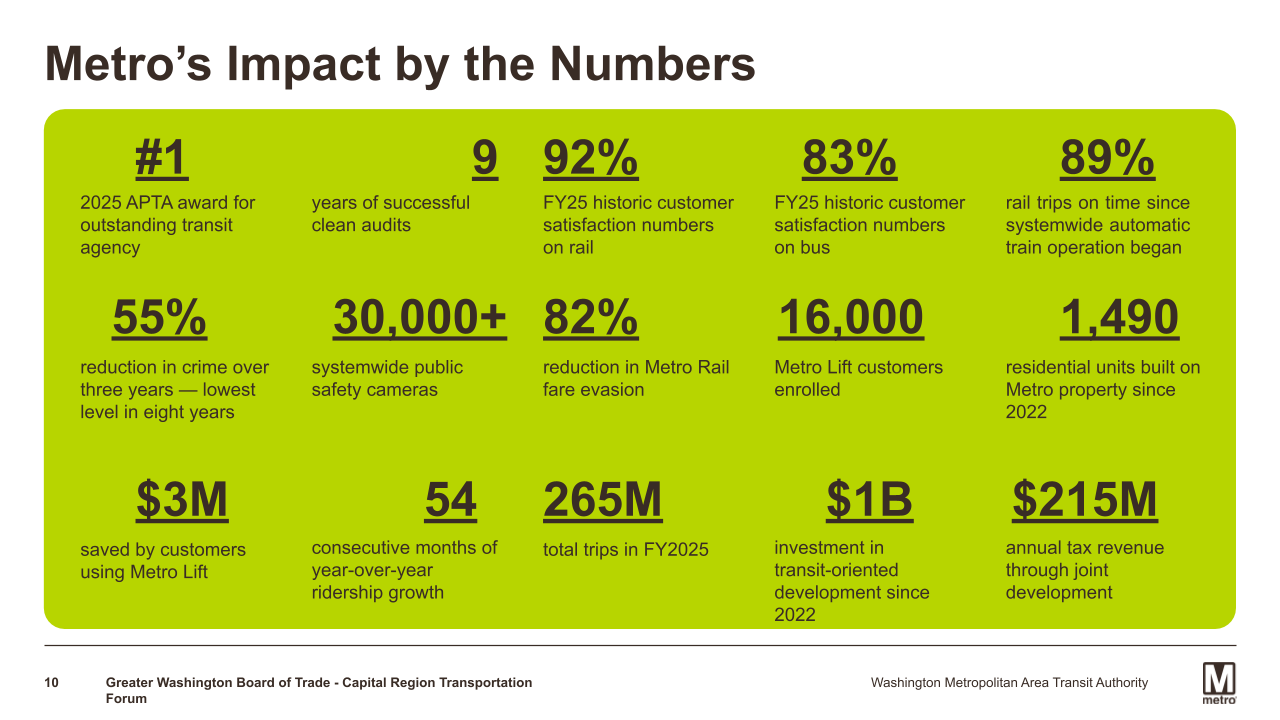
Randy Clarke, WMATA’s General Manager and CEO, opened the forum with a State of Metro address highlighting both the system’s recent progress and the work still ahead to modernize and stabilize operations. He pointed to significant improvements in reliability, ridership, and safety, advancements that helped Metro earn recognition as the nation’s top transit system and achieve a 60% boost in reliability since 2022. Clarke also underscored the agency’s looming capital funding challenges, stressing the need for a sustainable, predictable regional funding solution to maintain this momentum and support Metro’s essential role in workforce mobility and economic growth. Looking forward, he outlined a vision for a modern, dependable transit network built on long-term investment, regional alignment, and a shared commitment to delivering a world-class transit experience.
 |
 |
DMVMoves: From Strategy to Action
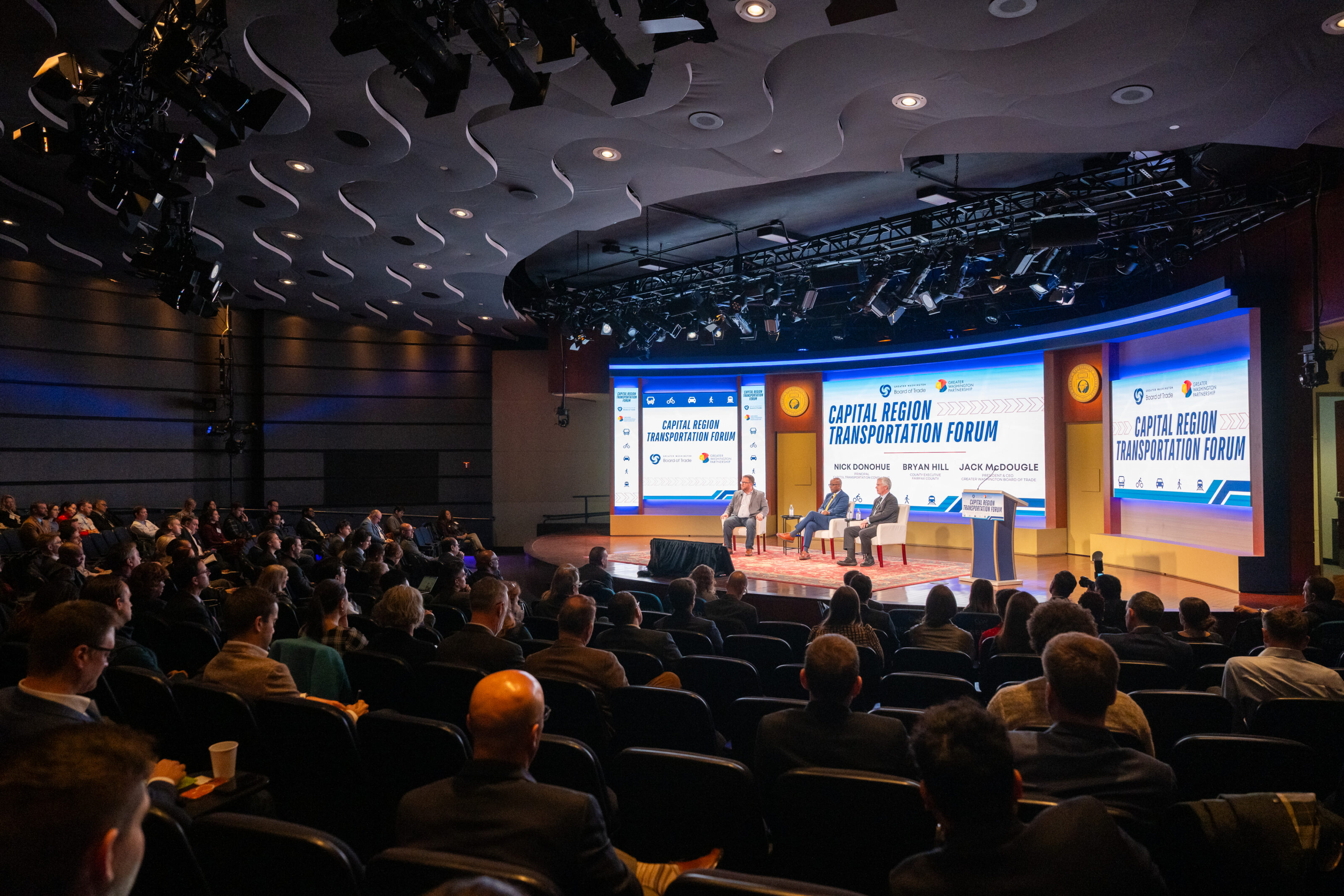
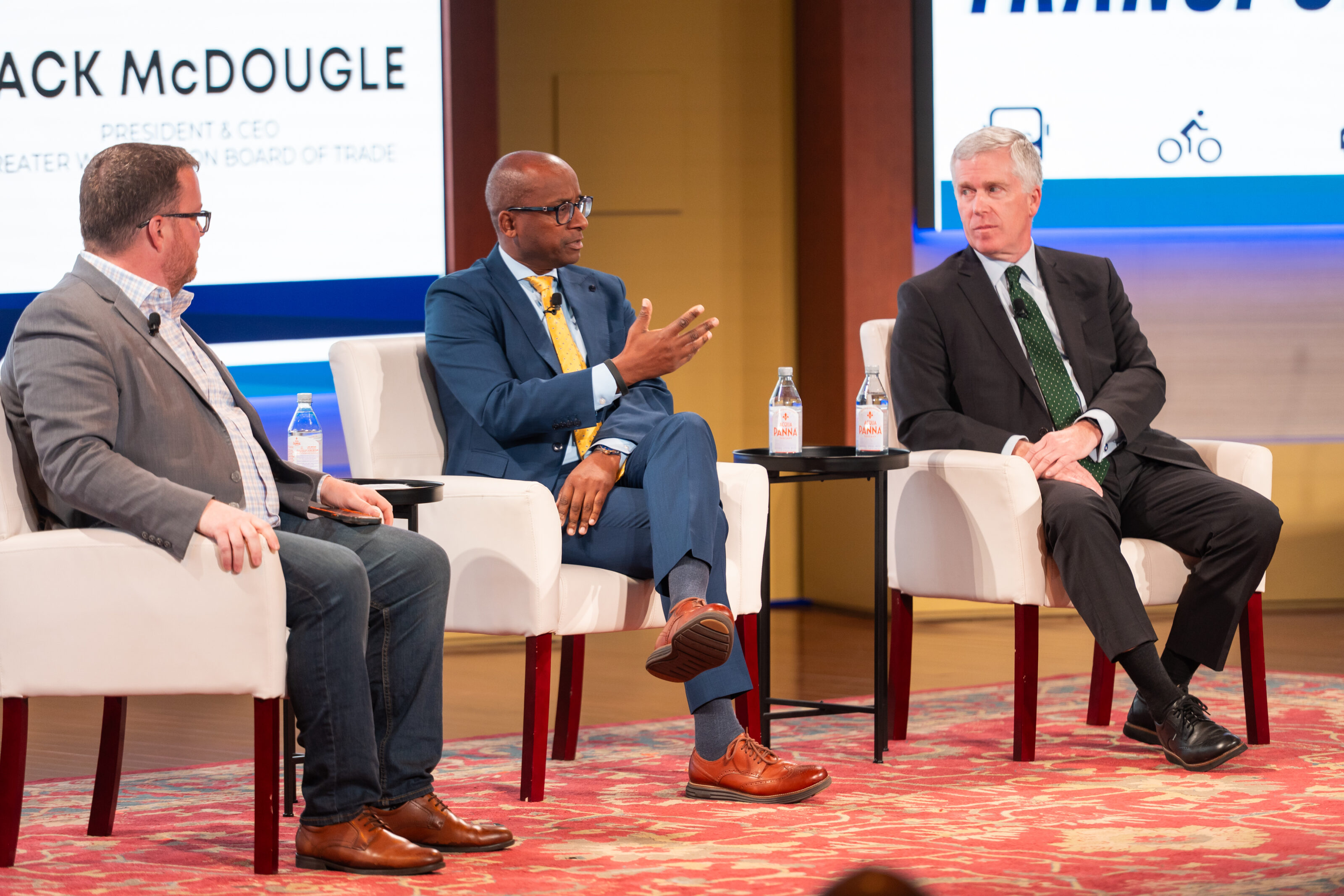
A panel discussion on DMVMoves explored the region’s ongoing efforts to align governance, secure sustainable funding, and strengthen transit operations across jurisdictions. Moderated by Jack McDougle, President and CEO of the Greater Washington Board of Trade, the conversation featured Fairfax County Executive Bryan Hill and Capitol Transportation Consulting Principal and DMVMoves facilitator, Nick Donohue.
The panelists highlighted the progress DMVMoves has made over the past year, culminating in a proposal for $460 million in new annual capital funding for Metro beginning in FY28, and underscored Metro’s criticality to residents, employers, and our greater region. They emphasized that addressing the region’s transportation challenges will require sustained, long-term collaboration that extends beyond the conclusion of the DMVMoves initiative.
 |
 |
Designing a Future-Ready Mobility Network
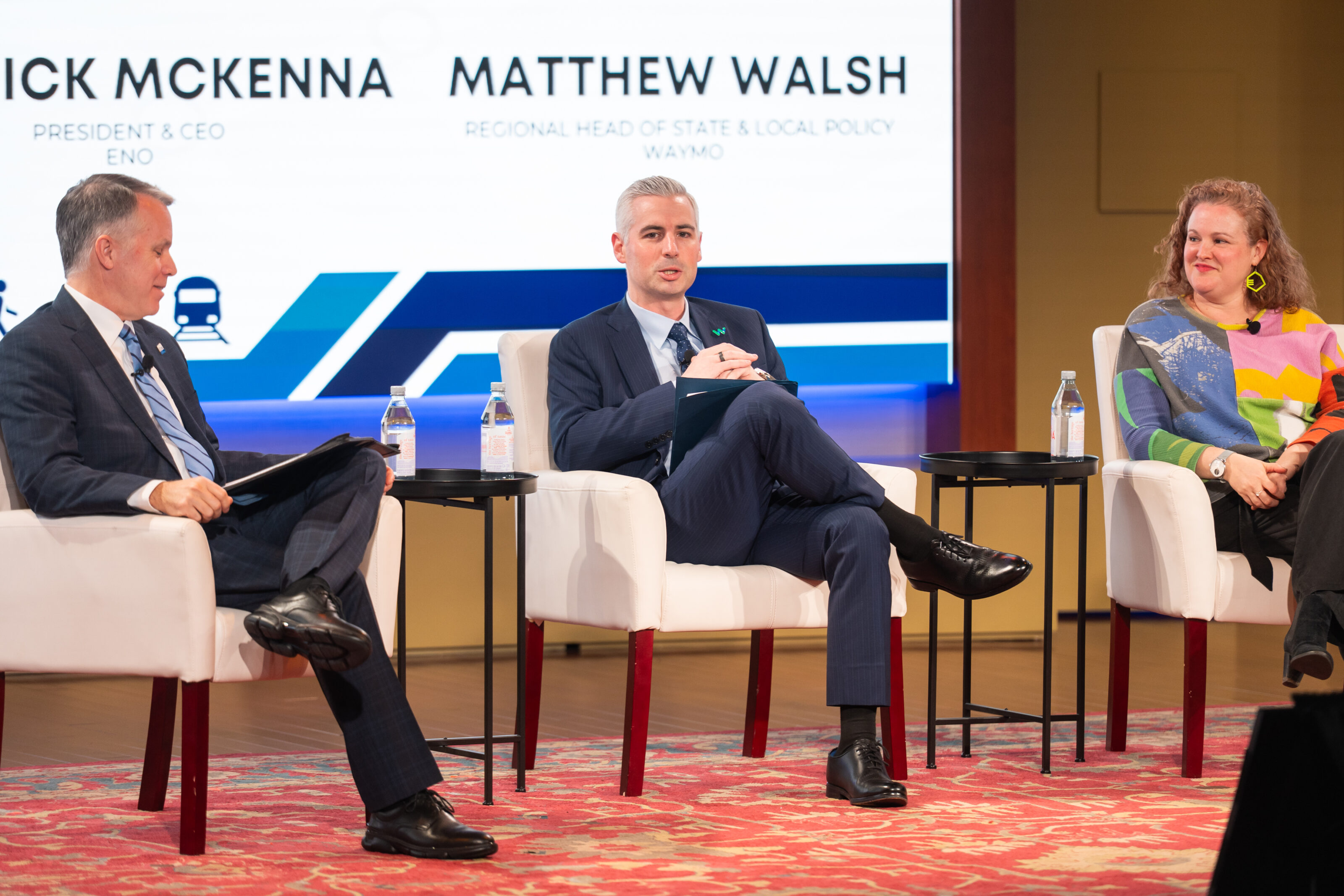
The forum concluded with a forward-looking conversation on how technology, data, and evolving innovation are reshaping the future of transportation. Moderated by Patrick McKenna, President and CEO of the Eno Center for Transportation, the panel brought together Laura Schewel from StreetLight Data and Matthew Walsh from Waymo.
Panelists shared insights on how real-time data, autonomous vehicles, and public-private partnerships, such as Transurban’s new 495 Express Lanes, can support smarter planning, more efficient use of resources, and better outcomes for commuters and communities alike. The discussion emphasized that the future of mobility depends not only on technology, but also on leadership that is willing and able to adapt to policies and investment strategies to match and enable innovation.
From transit reliability and funding to advanced mobility solutions, the path forward for the region’s transportation systems requires regional coordination, sustainable investment, and bold leadership.
The Greater Washington Partnership and the Greater Washington Board of Trade thank our speakers, partners, and participants for contributing to a dynamic and solution-driven conversation. Together, we are working to shape a transportation system that supports a stronger, more connected region.
Special thanks to our sponsors–Waymo, Amazon, Transurban, Uber, First National Bank, and WSP–for making this important event possible.
Watch the Forum
Join the Conversation
Together, we can shape the future of transportation in our region.
Share your thoughts on our region’s transportation future using the hashtag #CRTF2025 and tag us on LinkedIn, X, Facebook and Instagram.