
Perspectives


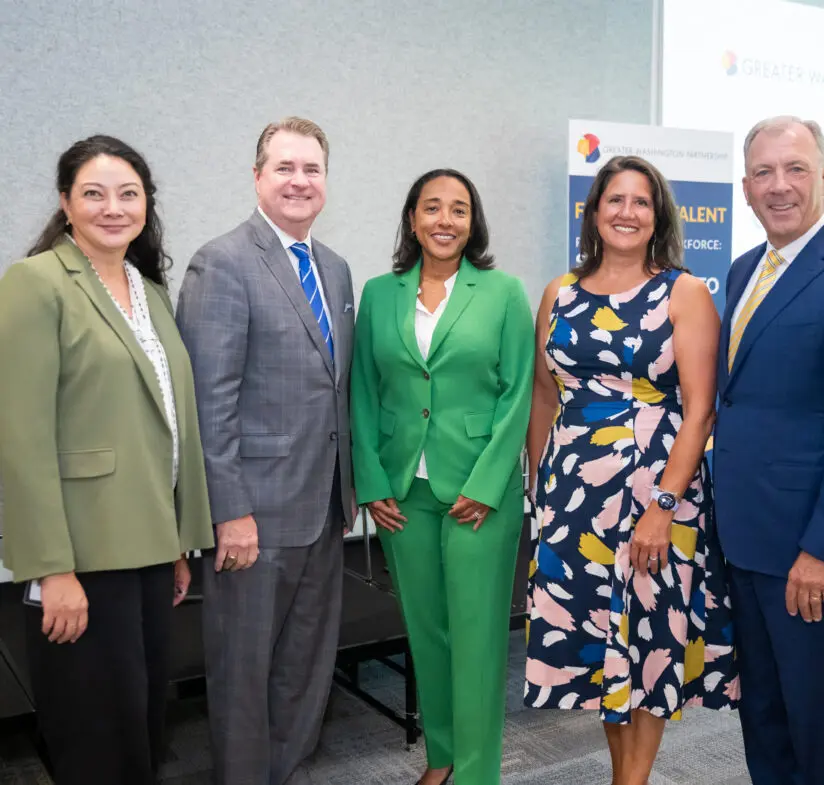
Advanced manufacturing is no longer just about the factory floor. Across the Baltimore-to-Richmond region, AI, robotics, cybersecurity, and other emerging technologies are reshaping what it means to work in manufacturing – and what it means to train, hire, and retain a manufacturing workforce. On April 21, Greater Washington Partnership convened cross-sector leaders for the latest installment in its Future of Talent conversation series to explore how the region can rise to meet this moment.
Event Overview
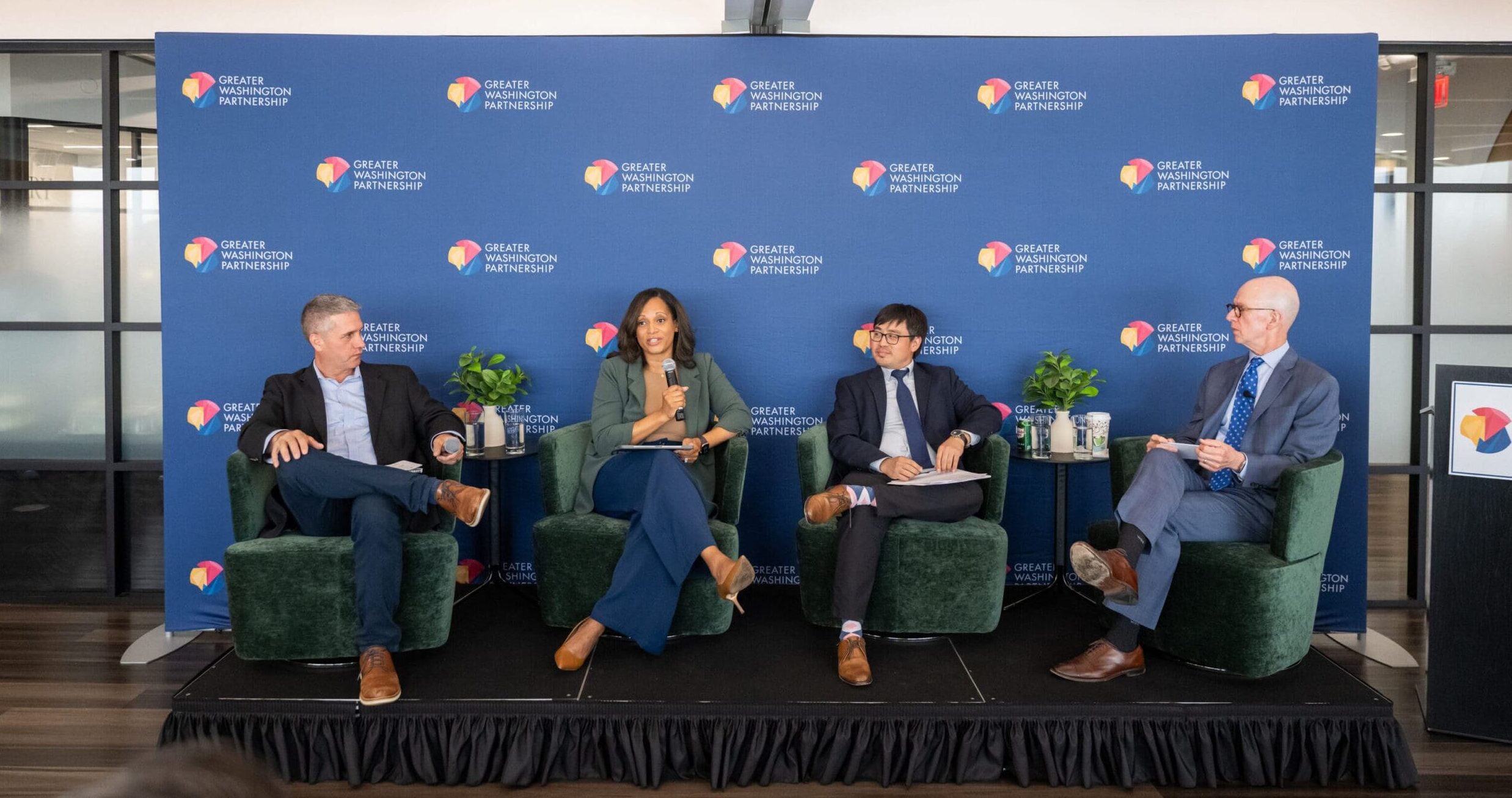
Talent Strategies for Advanced Manufacturing in the Age of AI brought together employers, educators, and workforce and economic development practitioners to examine how talent pipelines can evolve as the sector transforms. The conversation was moderated by Dane Linn, Senior Vice President of Corporate Initiatives at Business Roundtable – whose recent report, Revitalizing American Manufacturing, outlines a national roadmap for strengthening US manufacturing capacity and workforce. The panel also featured:
- David Liaw, Manager of MilVet Recruiting Programs and Workforce Development, Northrop Grumman Corporation
- Mike Kelleher, CEO & Executive Director, Maryland Manufacturing Extension Partnership
- Latoya Smith, Vice President for Employee Experience and Talent Strategy, Dominion Energy
The Blurring Line Between Manufacturing and Tech
One of the sharpest takeaways from the conversation: advanced manufacturing and tech skillsets are no longer distinct. AI, digital twins, robotics, and cybersecurity are embedded throughout operations – from quality control to field maintenance – and the pace of change is accelerating. As panelists put it, the sector and its jobs are evolving in months, not years.
This has real implications for how roles are defined, how skills are taught, and how the field is perceived. Panelists emphasized the opportunity to reframe advanced manufacturing as a modern, tech-enabled career pathway – and to close the communication gap between employers, educators, and prospective talent on what these jobs actually look like today.
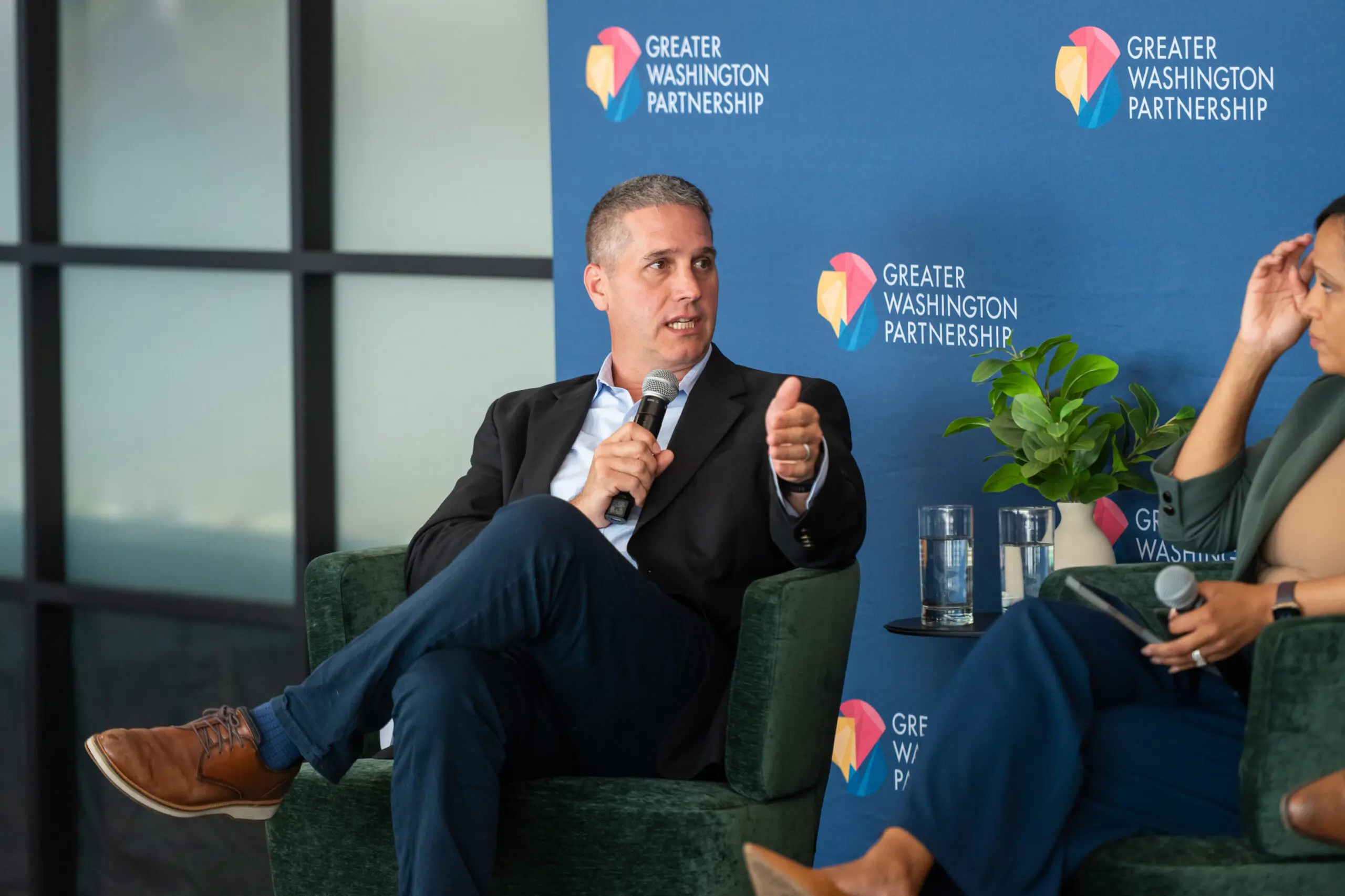
“It’s not ‘how has the role changed in the last three to five years?’ It’s six to 12 months.”
— Mike Kelleher, Maryland Manufacturing Extension Partnership
Building Pipelines That Keep Pace With Change
An aging workforce and the rapid pace of technological change are intensifying hiring pressures and accelerating the shift toward skills-based hiring and nontraditional pathways. Panelists pointed to veterans, military spouses, career changers, and reentry populations as underutilized talent pools that could fill projected talent gaps in the years ahead. Liaw noted that employers like Northrop Grumman are investing in helping veterans translate their service experience directly into careers in the defense industry. Smith also stressed the importance of moving beyond traditional degree requirements:
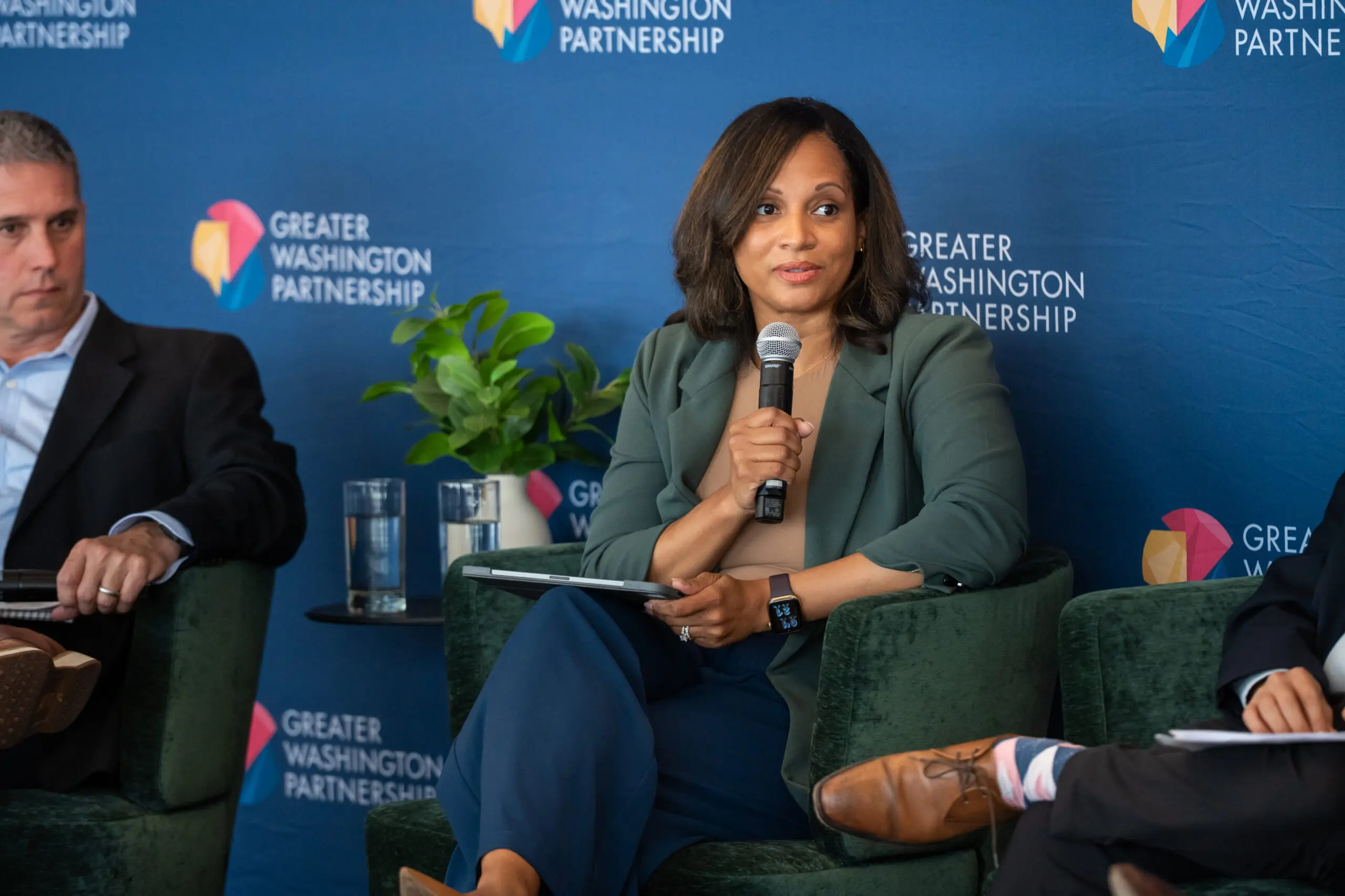
“It’s not just about four-year degrees. There are a lot of people retiring and roles that are changing. So we really need everyone that we can get, and we know there’s an opportunity for everyone.”
— Latoya Smith, Dominion Energy
Work-based learning – through apprenticeships, internships, and other experiential models – also emerged as a critical bridge, not just for building technical skills, but for developing the durable skills that employers consistently say are in short supply. Educators can’t cultivate these skills in a classroom alone; active employer participation is essential, and panelists stressed the importance of clear skills taxonomies so educators understand which skills map to which roles and progression paths. That imperative will only grow as populations age out of the workforce and working demographics shift – putting new pressure on employers to expand who they recruit and how they train.
Not all employers are equally equipped to meet that challenge. For smaller manufacturers, these pipelines can be difficult to build independently. Expanding apprenticeship models and deepening employer-education partnerships – with support from intermediaries like the Maryland Manufacturing Extension Partnership – is key to ensuring that businesses of all sizes can access the talent they need.
Workforce and Economic Development Coordination
The region’s advanced manufacturing base spans multiple industries – including aerospace, defense, and energy – rather than a single dominant cluster like automotive or semiconductors as seen in other regions. The upcoming opening of Northrop Grumman’s Blue Ridge Advanced Manufacturing Center in Waynesboro, Virginia – a 315,000-square-foot facility set to bring more than 300 jobs to the Shenandoah Valley – is a tangible example of that investment. That breadth is a strength, but fragmentation across workforce and economic development efforts remains a real challenge.
Panelists underscored that workforce development and economic development need to be thought of together, not in parallel. Site selection, infrastructure investments, permitting, and workforce pipelines are all pieces of the same puzzle. Public sector partners also have a meaningful role to play, with opportunities to invest in physical and digital infrastructure, support apprenticeship expansion, and elevate best practices across the region.
What’s Next
The region’s combination of major employers, strong suppliers, rich higher education assets, and federal presence creates a genuine opportunity to lead in advanced manufacturing – but only if stakeholders act in a coordinated way.
That cross-jurisdictional coordination is a cornerstone of Region Rising, the Partnership’s strategy for shaping a more resilient and competitive economy from Baltimore to Richmond. Advanced manufacturing is among the high-growth sectors identified in Region Rising as central to the region’s economic future – and building the talent pipelines to support it is among the most urgent priorities.
To learn more about The Future of Talent series or the Partnership’s Skills & Talent initiatives, contact Kimberly Sarro, Director of Skills & Talent, at [email protected].