
Perspectives


Greater Washington Partnership launched the region’s first employer-led, super- regional multimodal agenda in 2018, establishing a shared vision to modernize our transportation system. Since then, the Partnership’s table of leading employers have consistently reaffirmed the critical link between infrastructure investment and the region’s long-term economic competitiveness.
In 2024, the Partnership published the 5-Year Refresh of the Blueprint for Regional Mobility (the Refreshed Blueprint), informed by input from more than 100 public- and private-sector stakeholders. The Refreshed Blueprint identified and refined the region’s most urgent transportation priorities in a post-COVID landscape shaped by evolving travel patterns, workforce dynamics, and economic conditions. Throughout 2025, the Refreshed Blueprint served as the foundation for the Partnership’s Regional Mobility and Infrastructure work.
As the region faces economic transition and business uncertainty, the need to deliver transportation infrastructure that underpins job growth, expands access to housing, and strengthens regional economic competitiveness has never been more urgent. Recognizing these shifts the Partnership’s 2026 priorities are organized around six themes from the Refreshed Blueprint, each positioned for progress this year and central to our ongoing work.
Six Blueprint priorities for 2026:
- Implement sustainable funding models for regional transit agencies
- Advance investments in Baltimore’s multimodal transportation system
- Sustain Washington, DC as a world-class passenger rail hub
- Support Transit-Oriented Development as a tool to expand access to opportunity
- Enable a regionally coordinated technology-driven future
- Invest in high-performing public transit
1. Implement sustainable funding models for regional transit agencies
Progress since the 2024 Blueprint
Launched in May 2024, DMVMoves is a regional initiative led by the Metropolitan Washington Council of Governments (COG) and WMATA to align the District, Maryland, and Virginia around a shared vision for the future of public transit. The effort brought together elected officials, transit agencies, and community partners, including the Partnership, with a clear focus on strengthening and sustaining the region’s transit network, particularly by establishing a long-term funding path for Metrorail.
The initiative culminated in a regionally endorsed set of recommendations, including:
- $460 million in new annual capital funding for Metro before FY 2029, growing by 3 percent annually
- Creation of a regional bus priority network
- Shared service guidelines to support improved and more consistent local bus service
- Stronger coordination between VRE and MARC to expand regional rail service, especially following completion of the Long Bridge Project
Looking forward in 2026
The Partnership recognizes the central role a high-performing transit network plays in driving regional economic growth and remains committed to advancing predictable, reliable funding for the region’s transit operators. As the Virginia and Maryland General Assembly sessions get underway, lawmakers aim to meet the region’s growing transportation needs while also supporting critical local investments across their states. In Virginia, legislators are evaluating revenue-raising and tax modernization proposals that largely stem from the work of the SJ 28 Northern Virginia Growing Needs of Public Transit Joint Subcommittee, with action anticipated in 2026. In Maryland, legislators have introduced a bill to provide $167M of new dedicated funding to Metro starting in FY29. The path forward in the District remains less clear.
2. Advance investments in Baltimore’s multimodal transportation system
 Progress since the 2024 Blueprint The Partnership released two reports – the Economic Development Potential of the Red Line and The Economic Impact of the Maryland Transit Administration’s Capital and Operating Expenditures – both of which underscore a clear conclusion: sustained transit investment is a powerful driver of economic growth.
In 2025, the Maryland legislative session posed significant challenges for Baltimore’s transportation system. The state’s draft transportation budget proposed $1.3 billion in cuts, including $672 million cuts to the Maryland Transit Administration (MTA), threatening to delay critical state-of-good-repair projects across the region. In response, Baltimore’s Transit Future Coalition, a coalition co-led by the Partnership and the Greater Baltimore Committee and representing nearly 70 business, civic, and nonprofit organizations, worked closely with stakeholders and the Moore Administration to successfully restore and preserve the majority of those funds. As a result, this year’s transportation budget funds 90% of MTA repairs needs through 2030.
Looking forward in 2026
The Partnership remains committed to securing investments to realize a world-class transportation system in Baltimore, one that supports economic growth, expands access opportunities, and strengthens regional competitiveness. Through Baltimore’s Transit Future, we will continue to work to advance critical transit investments, including Baltimore Red Line service, by working with the Moore Administration and City and State leaders to ensure the success of this long overdue east-west connection.
The Partnership also remains focused on the rebuild of the Francis Scott Key Bridge, a critical piece of regional infrastructure that provided a key connection for both people and goods travelling in our region. While revised cost estimates reflect the scale and complexity of the project, restoring and enhancing this corridor remains a top priority. We will continue to work with state and federal partners to support a timely rebuild that strengthens supply chains, improves mobility, and reinforces the Port of Baltimore’s role as a key economic engine for the region. Following a joint statement from USDOT Secretary Duffy and Governor Moore on their shared commitment to accelerating the rebuild of this critical asset, we are optimistic about the future of this critical project.
3. Sustain Washington, DC as a world-class passenger rail hub
Progress since the 2024 Blueprint
Passenger rail projects across the Washington, DC region have continued to advance since 2024, with projects moving forward at different scales and timelines. Construction is underway on a second entrance at the Crystal City Metro station, which is expected to open in spring 2027. Work on the Long Bridge replacement is also in progress and will continue through the projects anticipated completion in 2030.
In coordination with the Long Bridge Project, Alexandria station improvements and the Alexandria Fourth Track Project are expected to begin construction in 2026, laying the groundwork for expanded passenger rail capacity and improved reliability. In Baltimore, the B&P Tunnel Replacement program (the Frederic Douglass Tunnel project) has continued to advance, with major utility relocations underway and modernization of MARC train storage facilities slated to begin in the coming months.
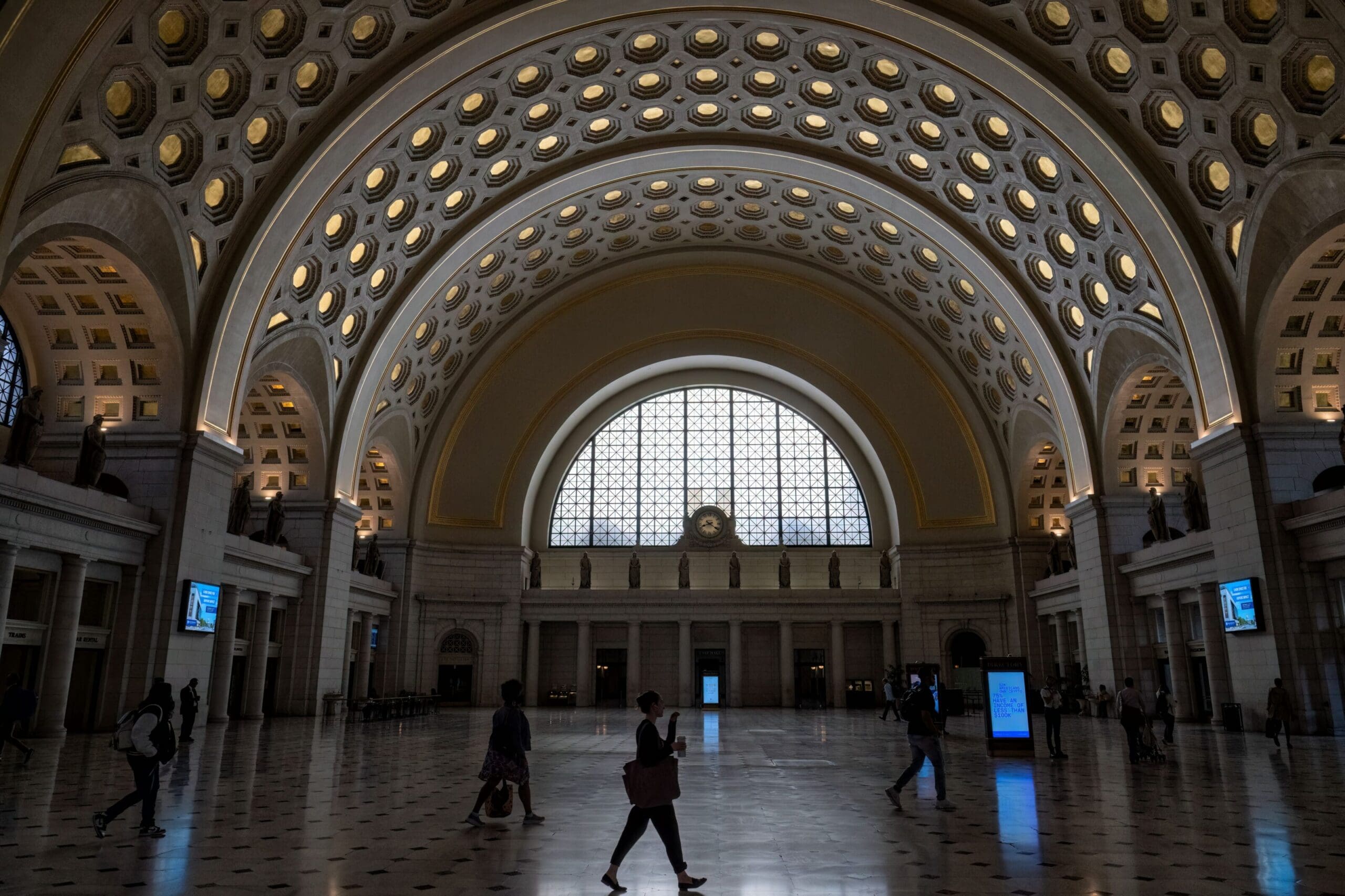
At Washington Union Station, near-term improvements are already visible, including new platforms, concourse upgrades, and enhanced retail and operational management. Planning for the station’s long-term redevelopment, encompassing expanded concourses, increased capacity, and mixed-use activation, continues to move forward, though the project remains in design and early development following completion of the federal environmental review process.
Beyond individual projects, VRE and MARC have each released long-range plans that articulate a shared vision for more frequent, reliable, and interconnected regional rail service. The Partnership published blog posts featuring the Maryland and Virginia plans, underscoring how these investments are critical to strengthening the region’s economic competitiveness, expanding access to jobs, and supporting long-term growth.
Looking forward in 2026
Looking ahead in 2026, the Partnership will continue to engage closely on the advancement of major passenger rail projects that are foundational to the region’s long-term economic competitiveness. As planning transitions into early construction for several marquee investments – including the Long Bridge, Alexandria station improvements, and the B&P Tunnel Replacement Program – regional leaders will face critical decisions around project sequencing, governance, and sustained federal and state funding. The Partnership will work with public agencies, business leaders, and regional stakeholders to elevate the economic and workforce benefits of these investments and support policies that enable timely project delivery. At the same time, the Partnership will engage on the implementation of newly released long-range visions from VRE and MARC, using them as tools to advance a more coordinated, high-capacity regional rail network that better connects workers to jobs and strengthens the region’s economic resilience.
4. Support TOD as a tool to expand access to opportunity
Progress since the 2024 Blueprint
Our region has long been a leader in transit-oriented development (TOD), boasting numerous dense, mixed-use, walkable communities anchored by transit. Since 2024, Maryland has made TOD a key priority, identifying it as an important tool for increasing transit ridership, tackling the state’s affordable housing shortage, and bolstering inclusive economic growth. In 2025, The Maryland Department of Transportation (MDOT) stood up a competitive TOD Capital Grant and Revolving Loan Fund (TOD Fund) to advance TOD projects across the state, awarding $1.25 in grant funding in the initial phase. MDOT released a strategy for TOD along the MARC Penn Line, and has advanced a number of joint development projects, including Reisterstown Plaza Metro Station, Odenton MARC Station, and Bowie State MARC Station. WMATA has also advanced a number of joint development projects, including Capitol Heights North Bethesda, Deanwood, and Takoma Park.
Looking forward in 2026
To support efforts to expand TOD throughout the region, the Partnership has published a Transit Oriented Development Policy Brief, a positioning resource that identifies key policy solutions for enabling TOD implementation. Building on this foundation, the Partnership will continue to provide resources and engage policy makers, legislators, and key stakeholders in advancing TOD supportive initiatives. In Maryland, Governor Moore put forward his Housing Growth and Affordability Agenda for the 2026 legislative session, which includes the Maryland Transit & Housing Opportunity Act, legislation designed to make it easier to build homes near transit. The Partnership is committed to working with stakeholders to support the passage of this bill to advance TOD across the state.
5. Enable a regionally coordinated technology-driven future
Progress since the 2024 Blueprint
Since the publication of the Refreshed Blueprint, the region has made meaningful progress toward a more seamless, technology-enabled transportation system. In summer 2025, WMATA launched ‘Tap. Ride. Go.’ on its rail network, with expansion to bus service shortly thereafter. Riders can now tap a contactless credit or debit card, or a mobile wallet, eliminating the need to visit fare machines and improving boarding efficiency, particularly on bus routes. The Partnership has championed integrated mobility for nearly a decade, first articulating a regionwide vision for systemwide tap-to-pay in its 2018 Unlocking the Promise of Integrated Mobility in the Capital Region issue brief.
The Blueprint also emphasized the importance of a coordinated regional approach to autonomous vehicles. Since its release, autonomous vehicle activity, particularly from robotaxi operator Waymo, has expanded nationally and within the region. While no jurisdictions in the Baltimore–Washington–Richmond corridor have fully authorized autonomous vehicle operations, interest and deliberation are increasing. These efforts, however, remain fragmented and lack a shared regional framework.
Looking ahead in 2026
In public transportation, continued implementation of the DMVMoves vision is expected to build on recent integrated mobility successes, including more consistent deployment of modern vehicles, farebox technology, and real-time customer information across systems. Together, these investments can further improve reliability, customer experience, and system efficiency.
Autonomous vehicle policy discussions are also expected to advance in 2026. Waymo testing activity continues in Washington, DC, and Baltimore. In DC, next steps hinge on the release of a DDOT report now scheduled for May 2026, following significant delays. In Virginia, a formal working group is expected to deliver a comprehensive report to the General Assembly in December 2026. In Maryland, Governor Moore has expressed enthusiasm for welcoming autonomous vehicles in Baltimore, though the state’s policy path remains uncertain. The Partnership will continue to track and engage in these discussions as the region works to position itself as a national leader in mobility innovation.
6. Invest in high-performing public transit throughout the region
Progress since the 2024 Blueprint
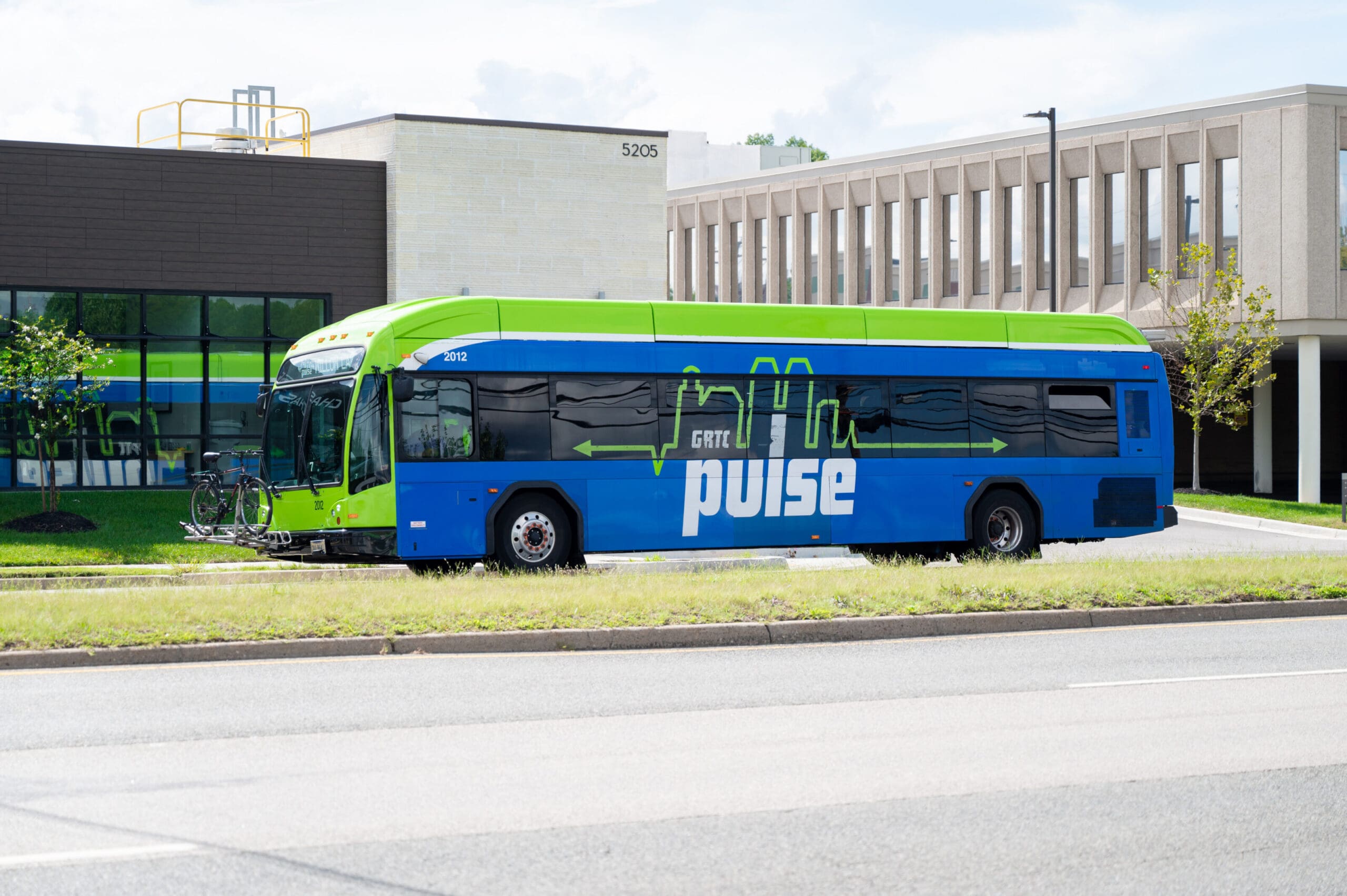
Throughout the region, rapid transit and bus priority projects are taking shape, delivering a more connected, reliable, and accessible transit system. In Maryland, the Purple Line – a light-rail project connecting Montgomery and Price George’s Counties – is nearing completion and is scheduled to begin passenger service in January 2028, and will provide enhanced connections to Metro, MARC, and Amtrak. Montgomery County’s Flash BRT network is also moving forward, with the Viers Mill Road and MD 355 corridors expected to launch service in 2028 and 2029, respectively. In Washington, DC, there are currently 15 active bus priority projects in various stages of planning, design, or construction, reflecting continued momentum to improve bus speed and reliability. In the Richmond region, progress continues on the Pulse Western Extension Project and the North-South expansion, consistent with the Partnership’s Connecting the Richmond Region study, which highlights the importance of expanding high-capacity transit to support regional mobility and economic growth.
Looking forward in 2026
Looking ahead in 2026, the Partnership will remain focused on advancing the next phase of high performing transit investments across the region, as several projects move from planning into delivery. The Partnership will engage policymakers, transit agencies, and business leaders to reinforce the economic case for sustained and predictable transit funding and to elevate the role these investments play in connecting workers to jobs and supporting inclusive growth. Through research, convenings, and public engagement, the Partnership will continue to align near-term project delivery with long-term regional mobility goals—ensuring transit investments keep pace with growth and strengthen the region’s competitiveness.
Conclusion
Together, these six priorities reflect both the progress the region has made and the work that remains to ensure our region’s transportation system keeps pace with economic growth and evolving travel needs. As projects advance from planning to delivery and policy discussions intensify across jurisdictions, sustained leadership, coordination, and investment will be essential. The Greater Washington Partnership will continue to convene employers, engage public-sector leaders, and advance data-driven policy solutions to help translate the Refreshed Blueprint into action. By aligning near-term opportunities with a long-term regional vision, the Partnership remains committed to strengthening mobility, expanding access to opportunity, and reinforcing the region’s competitiveness in 2026 and beyond.